
Ever walked away from a feedback conversation feeling like you said a lot, but nothing truly landed? Or perhaps you’ve received feedback that left you scratching your head, wondering what exactly you needed to change. It’s a common struggle in any professional environment.
Vague feedback is a missed opportunity, often leading to frustration and stagnation rather than growth. This is precisely where the SBI feedback framework steps in. It’s a powerful, structured approach designed to make your feedback clear, objective, and actionable, transforming those difficult conversations into genuine moments of development.

Why Traditional Feedback Often Misses the Mark
Many of us fall into the trap of delivering feedback that’s too general, too critical, or too focused on interpretation rather than observation. We might say, “You need to be more proactive,” or “Your communication style isn’t effective.” While well-intentioned, these statements often trigger defensiveness because they lack specific examples and measurable outcomes.
This kind of vague feedback leaves the recipient guessing. They might nod along, but internally, they’re wondering, “What specific instance are they talking about? What exactly did I do? And how did it affect anyone?” Without this clarity, behavior change becomes incredibly difficult, if not impossible. Furthermore, it can erode trust and make future feedback sessions even more daunting.
Understanding the SBI Feedback Framework
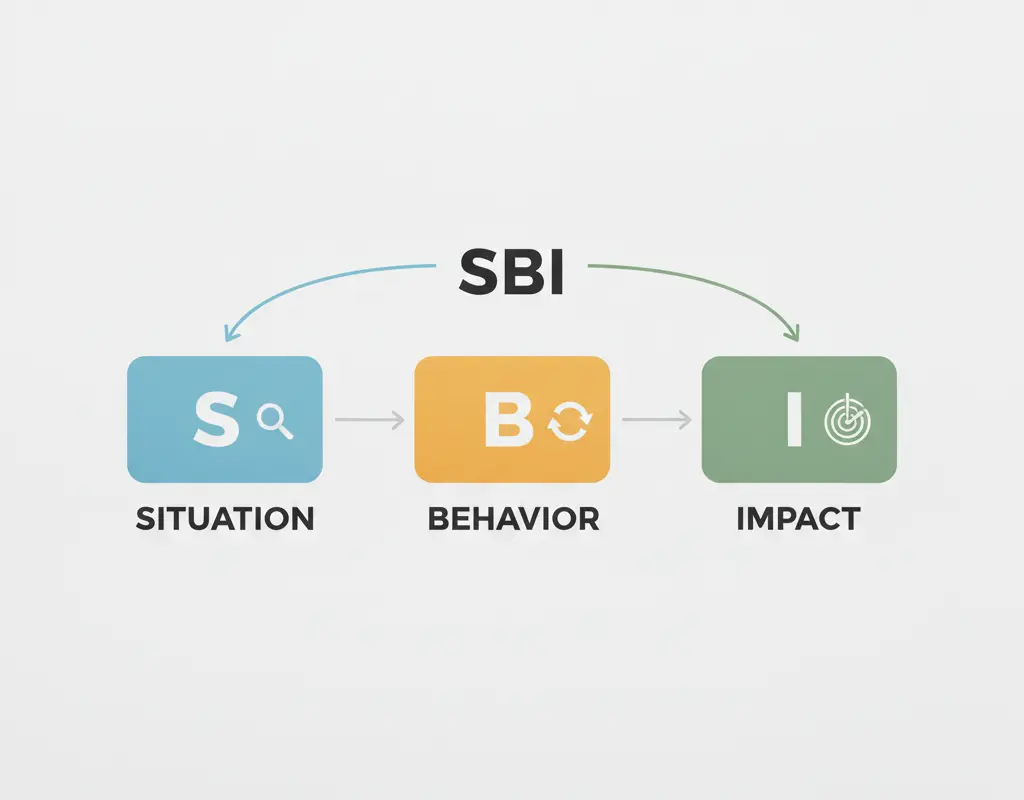
The SBI framework stands for Situation, Behavior, and Impact. It’s a simple yet profoundly effective model for structuring your feedback. By breaking down your observations into these three distinct components, you provide a clear, objective narrative that helps the recipient understand exactly what happened, what they did, and what the consequences were.
This structure removes ambiguity and minimizes subjective judgment, focusing instead on observable facts and their direct effects. It shifts the conversation from “You are” to “When you did X, Y happened,” making the feedback easier to receive and act upon.
Situation (S): Setting the Scene
The first step in the SBI feedback framework is to describe the specific situation where the behavior occurred. This isn’t about generalities; it’s about pinpointing the exact time, place, and context. Think of yourself as setting the stage for a story.
Being precise about the situation helps jog the recipient’s memory and ensures you’re both on the same page. Without a clear “S,” the feedback can feel disconnected or irrelevant. It also helps to depersonalize the feedback, making it about a specific event rather than a person’s general character.
- Example: “During our team’s client presentation last Tuesday morning at 10 AM, when you were outlining the project timeline…”
- Why it matters: This specificity eliminates guesswork. It grounds the feedback in a verifiable reality, making it much harder for the recipient to dismiss or misunderstand the context.
Behavior (B): What You Observed
Next, describe the specific, observable behavior you witnessed during that situation. This is crucial: focus only on what you saw or heard, not your interpretations or assumptions about intent. Avoid loaded language or subjective evaluations.
For instance, instead of saying “You were rude,” describe the actions that led you to that conclusion. This objective description ensures the feedback is factual and avoids putting the recipient on the defensive. Remember, you’re a camera, not a mind-reader.
- Example: “…you interrupted Sarah three times while she was explaining the budget projections and then checked your phone for about a minute.”
- Why it matters: Focusing on observable behavior means the feedback is about actions, which can be changed, rather than personality traits. It keeps the conversation constructive and actionable.
Impact (I): The Consequences and Feelings
Finally, explain the impact of that behavior. This is perhaps the most critical component of the SBI feedback framework, as it connects the dots between the action and its consequences. Describe how the behavior affected you, the team, the project, or the client.
The impact can be tangible (e.g., “we missed the deadline”) or emotional (e.g., “it created an uncomfortable atmosphere”). Articulating the impact helps the recipient understand the significance of their actions and provides a clear reason for them to consider changing. It builds empathy and a sense of shared responsibility.
- Example: “…which led to Sarah losing her train of thought and appearing flustered. Consequently, I noticed some clients disengaging, and it made our team seem unprepared and unprofessional.”
- Why it matters: Understanding the impact provides the “why” behind the feedback. It motivates change by illustrating the real-world consequences, fostering a deeper understanding of professional responsibility and its ripple effects.
Crafting Your SBI Feedback: A Step-by-Step Guide
Delivering SBI feedback effectively requires more than just knowing the components; it demands preparation and a thoughtful approach. Before you even open your mouth, take a moment to reflect and organize your thoughts.
- Identify the Specific Event: Pinpoint the exact situation you want to address. When did it happen? Where? Who was involved?
- Document the Behavior: Write down precisely what you observed. Use active verbs and objective descriptions. Avoid judgments or interpretations.
- Clarify the Impact: How did that behavior affect you, others, the team, or the project? Be honest about the consequences, both practical and emotional.
- Prepare Your Opening: Start by asking if it’s a good time to talk, and then gently set the stage with the “Situation.”
- Practice (If Needed): Especially for sensitive topics, mentally rehearse or even write down your SBI statement to ensure clarity and conciseness.
Remember, the goal is not to criticize, but to help someone grow. Approaching the conversation with a supportive, curious mindset can make all the difference. As a manager, mastering this skill is essential for developing your team and fostering a culture of continuous improvement, which aligns with what are qualities of a good manager.
SBI in Action: Real-World Scenarios
Let’s look at how the SBI feedback framework applies to different situations, from positive reinforcement to addressing areas for development. The beauty of SBI is its versatility.
Scenario 1: Positive Feedback
SBI isn’t just for corrective feedback; it’s incredibly powerful for acknowledging good work too. Positive SBI feedback reinforces desired behaviors and makes employees feel truly seen and valued, contributing significantly to engagement, a key factor highlighted by Gallup’s Q12 research on employee engagement.
- S (Situation): “During last week’s sprint review, when we were discussing the challenges with the new API integration…”
- B (Behavior): “…you proactively jumped in, explaining a potential workaround you’d researched independently, and then sketched out a solution on the whiteboard.”
- I (Impact): “Your initiative saved us valuable time, prevented a potential delay, and inspired the rest of the team to think more creatively about solutions. It really boosted morale and kept us on track.”
Scenario 2: Developmental Feedback
This is where SBI truly shines, turning potentially uncomfortable conversations into objective, growth-oriented discussions.
- S (Situation): “Yesterday, during the client kickoff meeting for Project Alpha, when Sarah was presenting the initial mock-ups…”
- B (Behavior): “…you consistently interrupted her to correct minor details and offered alternative suggestions before she had finished explaining her rationale.”
- I (Impact): “This made Sarah appear less confident and undermined her authority in front of the client. It also created an impression that we weren’t a unified team, which could impact our credibility and the client’s trust in our process.”
Scenario 3: Addressing a Recurring Issue
For behaviors that are becoming a pattern, SBI helps you address the cumulative effect without making it feel like a personal attack.
- S (Situation): “Over the last two weeks, specifically in our morning stand-up meetings, when we’re discussing daily progress and blockers…”
- B (Behavior): “…you’ve consistently arrived 5-10 minutes late, sometimes missing critical updates from other team members.”
- I (Impact): “When you’re late, it delays the start of the meeting, means we have to repeat information, and signals to the rest of the team that their time isn’t being fully respected. This impacts our efficiency and the sense of punctuality we need to maintain as a cohesive unit.”
Adapting the SBI Framework for Different Contexts
The core of the SBI feedback framework remains constant, but its application can be nuanced depending on the recipient, the relationship, and the context. Understanding these adaptations can significantly enhance your effectiveness.
Peer-to-Peer Feedback
When giving feedback to a colleague, the “Impact” component often leans heavily on mutual goals and team dynamics. Frame the impact in terms of how it affects shared objectives or the collaborative environment. For example, “Your delay in submitting your part of the report meant I had less time to review and integrate it, putting our joint deadline at risk.” This maintains a focus on shared responsibility and professional standards.
Upwards Feedback
Providing feedback to your manager requires particular care and a focus on organizational impact. The “Impact” should connect to team performance, project success, or overall company objectives, rather than personal feelings, unless directly relevant to your ability to perform. For instance, “When you frequently change project priorities mid-week (S), it means my team struggles to complete tasks effectively (B), leading to missed deadlines and increased stress for the team (I).” This approach is often more constructive and well-received.
Remote and Hybrid Teams
In a virtual environment, non-verbal cues are often missed, making clear, structured feedback even more vital. Be extra diligent about providing precise “Situation” details (e.g., “During our Zoom call on Monday at 3 PM, when we were discussing the Q3 strategy”) and “Behavior” (e.g., “you kept your camera off and were visibly typing during others’ presentations”). The “Impact” can then address perceived disengagement or communication breakdowns. This attention to detail is crucial for effective communication, especially for new managers navigating their first 90 days as a new manager.
High-Stakes or Sensitive Situations
For particularly sensitive issues, consider delivering SBI feedback in a private, one-on-one setting. Start by asking permission to share an observation, for example, “Would you be open to some feedback about how that meeting went?” This respects the individual and prepares them to listen. The goal is always to support their development, not to shame or blame. Remember, effective feedback is a cornerstone of strong leadership, impacting what actually changes when you become a manager.
Maximizing Your Impact with SBI
Simply delivering SBI feedback is the first step; maximizing its impact requires a few more considerations:
- Be Timely: Deliver feedback as close to the event as possible, while both parties can still recall the details clearly. This increases relevance and makes the “Situation” much easier to establish.
- Listen Actively: After delivering your SBI statement, pause and allow the other person to respond. Listen to their perspective without interruption. They might offer context you weren’t aware of, or they might simply need to process what you’ve said.
- Focus on Solutions: Once the impact is understood, shift the conversation towards what can be done differently in the future. Ask, “What are your thoughts on how we could approach this next time?” or “How can I support you in making this change?” This collaborative approach fosters ownership.
- Follow Up: For significant developmental feedback, schedule a follow-up conversation. This shows you’re invested in their growth and provides an opportunity to acknowledge improvement or address ongoing challenges. Consistent follow-up reinforces the importance of the feedback and the desired behavior change.
Conclusion
The SBI feedback framework is more than just a communication tool; it’s a discipline that fosters clarity, objectivity, and growth. By consistently applying Situation, Behavior, and Impact, you move beyond vague criticism to deliver feedback that is specific, actionable, and genuinely helpful. This approach reduces defensiveness, builds trust, and cultivates a culture of continuous learning within your team and organization.
Embracing SBI empowers you to have those crucial conversations with confidence, knowing you’re providing a clear path forward. Start practicing today, and watch as your feedback transforms from a source of dread into a powerful catalyst for positive change and professional development. For a handy reference, download our comprehensive SBI Feedback Checklist to guide your next conversation.