You just got the promotion. All that hard work, the late nights, the stellar project deliveries—it paid off. You’re officially a manager. Congratulations! It’s an exciting milestone, a clear recognition of your talent and dedication. But here’s the often-unspoken truth: the very skills that propelled you to this leadership role are likely not the ones that will make you successful in it. In fact, relying too heavily on your individual contributor superpowers can be your biggest stumbling block as you step into management. This isn’t just a personal challenge; it’s a critical career juncture. How you navigate this shift will define not only your future success but also the success and satisfaction of the team you now lead. This post will walk you through what’s truly happening beneath the surface and equip you with the new mindset and practical tools you’ll need.
The Promotion Paradox: Why Your Best IC Skills Can Hold You Back
As an individual contributor (IC), your value was measured by your personal output. You were the go-to expert, the problem-solver who could dive deep into the details, fix the bug, write the code, close the deal, or craft the perfect marketing campaign. Your promotion likely came because you excelled at these things. You were independent, self-sufficient, and probably took immense pride in your individual achievements. This is where the paradox lies: when you make the `individual contributor to manager transition`, your job description fundamentally changes from “doing” to “enabling.”
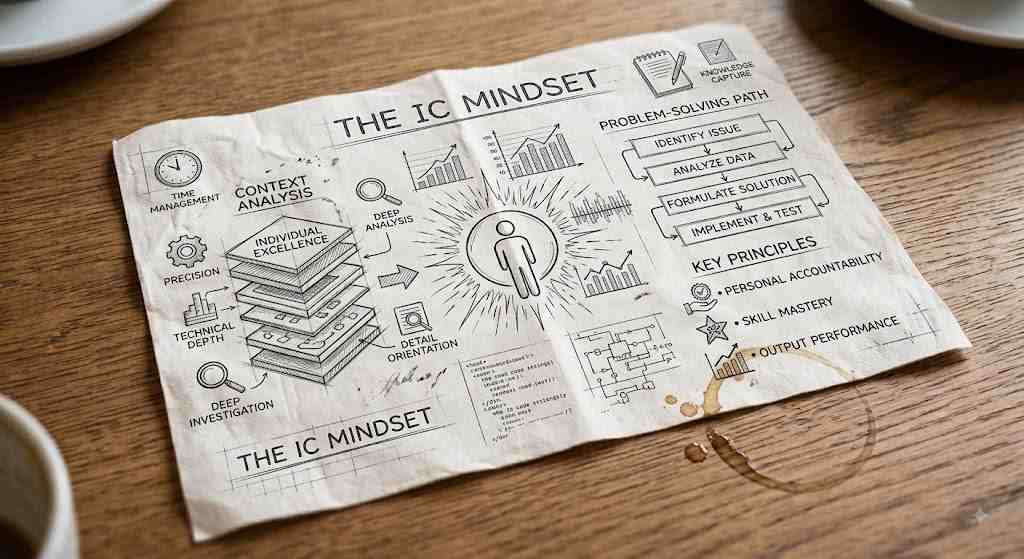
The irony is that many new managers struggle precisely because they continue to operate with an IC mindset. You might find yourself:
- Micromanaging: Because you know how to do it “right” and can often do it faster yourself, you hover or jump in, stifling your team’s growth and autonomy.
- Hoarding tasks: You keep the most interesting or critical work for yourself, either because you enjoy it, you don’t trust others to do it, or you feel you need to “prove” your continued individual worth.
- Focusing on details over strategy: You get bogged down in the minutiae of projects, missing the broader strategic direction or the overall development of your team.
- Feeling overwhelmed: Suddenly, your workload has doubled because you’re trying to do your old job *and* your new job. You haven’t truly let go.
This isn’t a failure of effort; it’s a failure of identity shift. As `Harvard Business Review` often points out, the shift from individual contributor to manager requires a fundamental change in how you define success and where you focus your energy. Your individual excellence is no longer the metric; your team’s collective excellence is.
From “Doing” to “Developing”: The Core qualities of a good manager
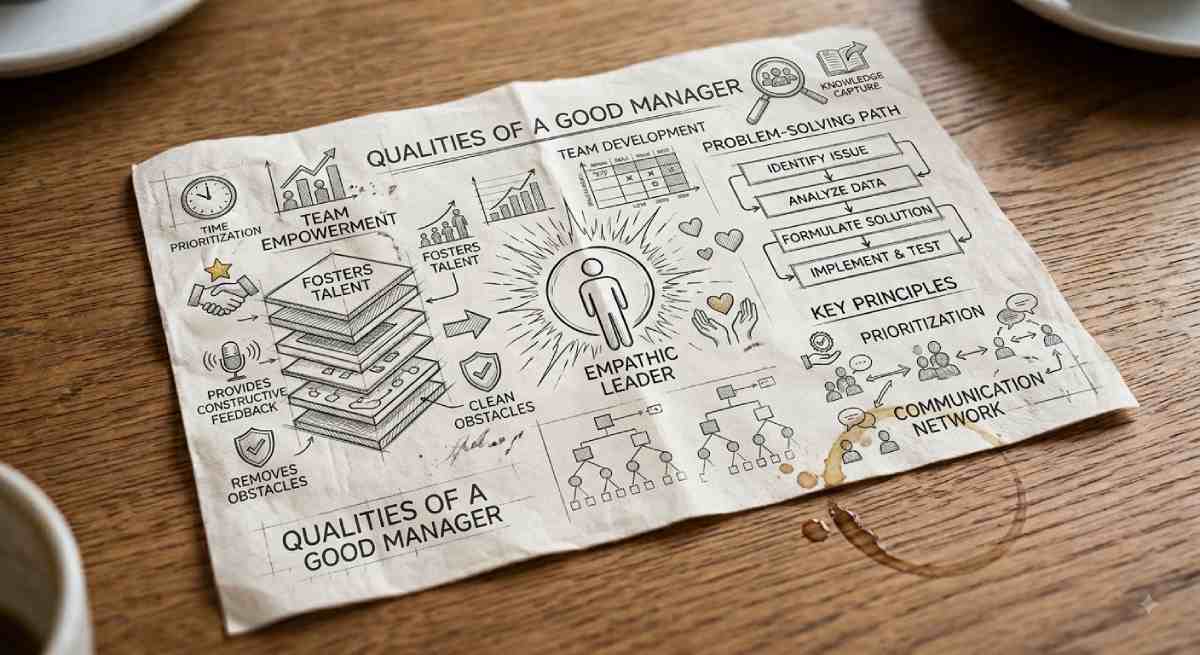
The most profound shift you must make when `becoming a manager for the first time` is internal: your success is now achieved *through* others, not solely *by* yourself. This means moving away from a primary focus on your own tasks and deliverables to a primary focus on the growth, productivity, and well-being of your team.
Shifting Your Focus from Tasks to People
This is more than just delegating; it’s about understanding that your direct reports are your new “product.” Your job is to cultivate their skills, remove obstacles for them, provide clear direction, and create an environment where they can thrive. This requires a completely different set of muscles:
- Empathy: Understanding their motivations, challenges, and aspirations.
- Active Listening: Truly hearing what they say (and don’t say), rather than just waiting for your turn to speak.
- Coaching: Guiding them to find their own solutions, rather than providing all the answers.
Research from `Gallup` consistently shows that a great manager is the number one factor in employee engagement, which directly correlates with productivity, retention, and profitability. Your people are your greatest asset, and nurturing them is now your most important task.
The Art of Delegation and Empowerment
Delegation is not merely offloading work; it’s a strategic tool for developing your team and multiplying your impact. Many new managers find delegation difficult for several reasons:
- “It’s faster if I just do it myself.” (Often true in the short term, but detrimental long-term).
- “I’m afraid they won’t do it as well as I would.” (A common insecurity that stunts team growth).
- “I don’t want to give up the interesting work.” (Understandable, but you’re now responsible for ensuring *everyone* has interesting work).
Effective delegation involves:
- Clear Expectations: What is the task, why is it important, what does success look like, and what are the deadlines?
- Adequate Resources & Support: Do they have the tools, information, and access they need? Are you available for questions without micromanaging?
- Trust: Giving them the autonomy to figure out *how* to do it, even if it’s not precisely how you would.
- Follow-up & Feedback: Checking in (not checking up) and providing constructive feedback on their performance.
When you empower your team through thoughtful delegation, you not only lighten your own load but also foster ownership, build skills, and boost morale.
Building Your New Management Toolkit: Essential Skills to Master
As you make the shift from individual contributor to leadership, your focus will naturally broaden. You’re no longer just responsible for your tasks but for the performance, cohesion, and development of a group of people. This requires specific skills.
Communication: Beyond Giving Instructions
As an IC, communication was often about clearly conveying information or sharing your work. As a manager, it’s far more nuanced:
- Coaching Conversations: Asking powerful questions that help your team members unlock their own potential and solve problems independently.
- Providing Feedback: Delivering constructive criticism and positive reinforcement in a way that motivates growth, not defensiveness. This requires specificity, timeliness, and a focus on behavior, not character.
- Vision Casting: Translating organizational goals into meaningful objectives for your team, helping them understand how their work contributes to the bigger picture.
- Difficult Conversations: Addressing performance issues, interpersonal conflicts, or sensitive topics with empathy, clarity, and firmness.
The `Center for Creative Leadership (CCL)` emphasizes that leadership isn’t about power, but influence and communication. Your words (and your silence) have immense power. For instance, when a team member, Sarah, is consistently missing a deadline on a critical report, instead of jumping in and doing it yourself, or simply telling her “don’t miss deadlines,” your role as a manager is to understand *why*. A useful script might be:
“Sarah, I’ve noticed the last two reports were submitted after the deadline. Can you walk me through what’s happening? What obstacles are you facing, and how can I support you in getting them in on time going forward?”
This shifts from accusation to collaboration and problem-solving, a hallmark of good management.
Conflict Resolution & Team Dynamics
Your team is a group of individuals with different personalities, work styles, and motivations. Conflict is inevitable. As a manager, you are now the primary facilitator of healthy team dynamics.
- Mediator: Stepping in to help resolve disagreements between team members, ensuring fair processes and respectful dialogue.
- Culture Setter: Modeling the behavior you expect—respect, openness, accountability—and actively fostering psychological safety where team members feel comfortable taking risks and speaking up.
- Diagnostician: Identifying underlying issues that might be causing friction or underperformance within the team.
Resources from `SHRM` highlight the importance of understanding team dynamics and conflict resolution techniques for creating a productive and harmonious workplace.
Strategic Thinking & Prioritization for the Team
As an IC, your priority was often your immediate tasks. Now, you must think at a higher level, understanding how your team’s work aligns with the organization’s strategic objectives. This involves:
- Protecting Your Team’s Focus: Shielding them from unnecessary distractions and ensuring they are working on the most impactful projects.
- Resource Allocation: Making smart decisions about where to deploy your team’s time and talent.
- Forecasting & Planning: Anticipating future needs, challenges, and opportunities for your team and department.
- Translating Strategy: Breaking down high-level company goals into actionable steps and clear deliverables for your direct reports.
This strategic lens is crucial for `moving from individual contributor to leadership` effectively and ensuring your team isn’t just busy, but impactful.
Practical Application: Your First 90 Days as a Manager Checklist

The initial months in your new role are critical for setting the tone, building trust, and establishing your management style. Here’s a checklist to guide you:
- Week 1-2: Listen and Learn
- Schedule 1:1 meetings with every team member. Ask about their current role, challenges, aspirations, and what they need from a manager. Your goal is to listen 80% of the time, talk 20%.
- Meet with key stakeholders. Connect with your own manager, peers in other departments, and internal “customers” of your team’s work to understand broader expectations and perceptions.
- Review existing team processes, projects, and metrics. Get a lay of the land without judgment.
- Week 3-4: Observe and Understand
- Observe team meetings, project workflows, and collaboration styles. Pay attention to dynamics, communication patterns, and where bottlenecks might exist.
- Identify initial patterns: What’s working well? What areas seem to need attention? Resisting the urge to jump in and fix everything immediately is key.
- Reflect on your own biases. Acknowledge your past IC role and actively work to detach from the urge to “do it yourself.”
- Month 2: Define and Discuss
- Articulate your initial leadership philosophy or vision for the team. (e.g., “My goal is to foster a collaborative environment where everyone feels empowered to innovate and contribute their best work.”) Share this with your team and invite feedback and discussion.
- Collaborate with your team to set clear, measurable goals for the next quarter. Ensure these align with organizational objectives and individual development.
- Start providing specific, constructive feedback. Focus on both positive contributions and areas for development.
- Month 3: Empower and Execute
- Delegate increasingly complex tasks, providing clear expectations and necessary support. This is where you actively shift from doing to enabling.
- Champion your team’s successes to leadership and other departments. Highlight their achievements.
- Actively seek out training or a mentor for yourself. Recognize that `becoming a manager for the first time` means you’re still learning too. A mentor can offer invaluable perspective on `how to know if you want to be a manager` long-term and how to excel in the role.
This transition is a marathon, not a sprint. The skills that made you a star individual contributor—your technical prowess, your ability to execute, your independent drive—are foundational, but they are not sufficient for management. You must embrace a new identity, one centered on developing others, communicating strategically, and fostering a high-performing team. Your success is no longer about *your* output, but the collective output and growth of the people you lead.
Embrace this journey of transformation. It will challenge you in new ways, but it also offers immense rewards: the satisfaction of seeing your team members grow, the impact of multiplying your efforts through others, and the development of a completely new set of leadership capabilities that will serve you throughout your career. It won’t always be easy, but it will be profoundly worthwhile.