
Ever felt that knot in your stomach when a new job offer lands, or when it’s time for your annual review? You know you’re worth more, but putting a number on it feels like a shot in the dark. This uncertainty often leads to leaving money on the table, purely because you didn’t confidently **research your market value**.
It’s a common mid-career pitfall: you focus on what you *want* to earn, rather than what the market dictates you *should* earn based on your skills, experience, and impact. Most people jump straight to negotiation tactics without this crucial foundational work. Let’s reframe this. Your power in any salary discussion doesn’t come from a clever script, but from an unshakeable understanding of your worth.

Why Your Market Value Matters More Than Ever
In today’s dynamic job market, salaries aren’t just about your last paycheck. They reflect a complex interplay of industry demand, specific skill sets, geographic location, and your unique contributions. Failing to understand these factors means you’re negotiating blind, which can seriously hamper your career trajectory and financial growth. This isn’t just about getting a raise; it’s about strategic career management.
Before you even think about what to say, you need to arm yourself with data. This means moving beyond anecdotal evidence and diving into verifiable facts. The goal is to build an airtight case for your compensation, grounded in objective reality, not just desire.
Step 1: Define Your Unique Value Proposition
Before looking externally, take an honest inventory of your own contributions. What specific skills do you bring to the table? What projects have you led or significantly impacted? Quantify your achievements whenever possible: ‘increased revenue by X%’, ‘reduced costs by Y%’, ‘improved process efficiency by Z%’. Think about both your hard skills and critical soft skills like leadership, communication, and problem-solving. This self-assessment forms the bedrock of your market value.
Consider where your skills align with your company’s strategic goals. Are you solving critical problems or driving key initiatives? Your value isn’t just about what you *do*, but the *impact* of what you do. This internal audit is a crucial first step in understanding your true worth and identifying any hidden mid-career skills gaps.
Step 2: Leverage External Salary Data Sources
This is where the real digging begins. Don’t rely on just one source. Cast a wide net to get a comprehensive view. Here are your go-to resources:
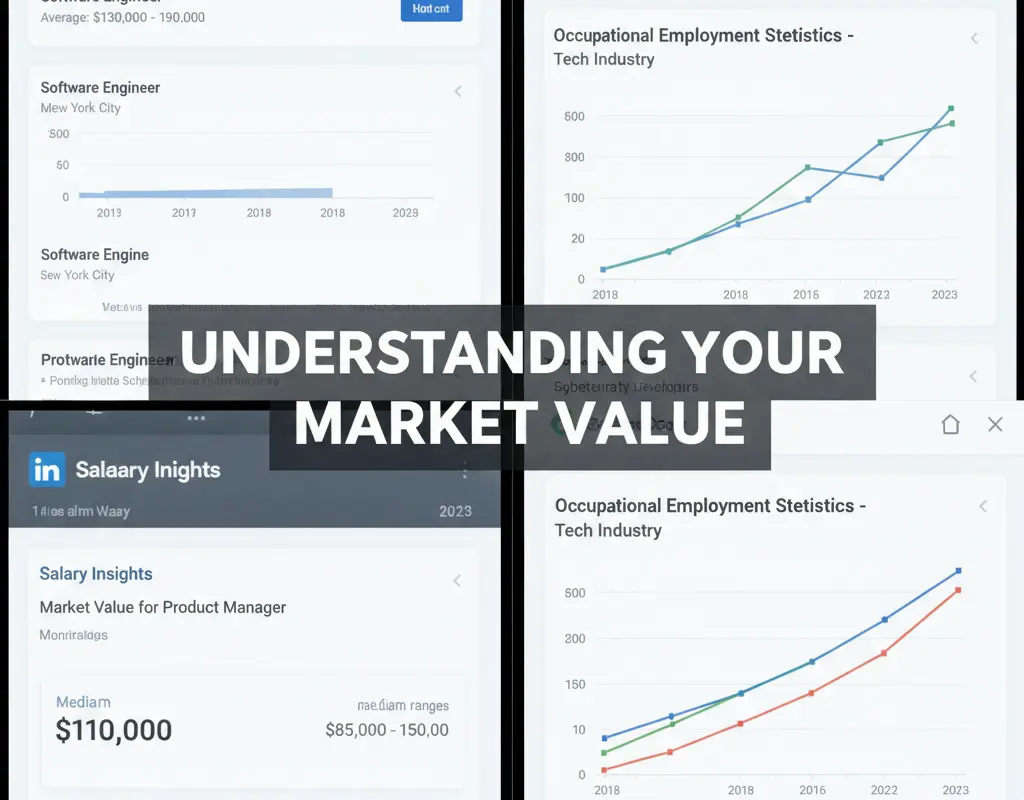
- Job Boards with Salary Data: Sites like Glassdoor, LinkedIn Salary, Indeed, and Salary.com provide estimated salary ranges based on job titles, locations, and experience levels. Use these as a starting point.
- Industry-Specific Surveys: Many professional organizations publish annual salary reports for their specific fields. These can offer highly accurate, niche data.
- Government Labor Statistics: The U.S. Bureau of Labor Statistics (BLS) Occupational Employment Statistics provides detailed wage data for hundreds of occupations across various industries and locations. This is an authoritative source for broad trends.
- Recruiters: Headhunters and recruiters often have an excellent pulse on current market rates, as they’re actively placing candidates. Reach out to a few trusted recruiters for informational chats (without necessarily looking for a job immediately).
When using these tools, be meticulous. Filter by exact job title, years of experience, company size, and geographic location. A project manager in New York at a large tech firm will command a vastly different salary than one in a smaller city at a non-profit, even with similar experience.
Step 3: Conduct Informational Interviews and Network
Direct conversations can provide invaluable qualitative data that salary aggregators can’t. Reach out to people in your network who hold similar roles at other companies, or even those who recently moved into new positions. Ask them about typical salary ranges, compensation structures, and what skills are highly valued in their organizations.
Frame these conversations as seeking advice or understanding market trends, not directly asking about their personal salary. For example: “I’m looking to better understand the current market for [your role] in [your industry]. What are you seeing in terms of compensation trends for someone with X years of experience and Y skill set?” You might also gain insights into how to build your personal brand authentically to enhance your perceived value.
Step 4: Understand Total Compensation, Not Just Base Salary
Your market value isn’t solely about your base salary. It encompasses the entire compensation package. This includes:
- Bonuses: Performance-based, annual, sign-on.
- Equity/Stock Options: Especially relevant in tech and startups. Understand vesting schedules and potential future value.
- Benefits: Health insurance, retirement plans (401k match), paid time off, parental leave, tuition reimbursement.
- Perks: Commuter benefits, professional development budgets, gym memberships, flexible work arrangements.
A lower base salary might be offset by a generous bonus structure or excellent benefits package. Always look at the holistic picture. Different companies prioritize different elements, so compare apples to apples when possible.
Step 5: Synthesize Your Findings and Build Your Case
Once you’ve gathered all your data, it’s time to consolidate. Look for trends and a clear range. What’s the average for someone with your profile? What’s the high end, and what specific attributes (skills, experience, impact) correlate with those higher figures?
Create a summary document, even if just for yourself, that outlines your unique value proposition (Step 1) and the supporting market data (Steps 2-4). This becomes your internal script, giving you the confidence to articulate your worth. It’s the preparation that empowers you to negotiate salary as a mid-career professional effectively.
Common Pitfall: The Single Data Point Trap
A frequent mistake is relying on just one data point – perhaps a friend’s salary or a single Glassdoor estimate. This can be misleading and lead to either over- or under-valuing yourself. The market is a range, not a fixed number. Your research should aim to establish a credible range, with specific examples of why you fall within the mid-to-high end of that range.
Mini Case Study: Sarah’s Strategic Research
Sarah, a marketing manager with 10 years of experience, felt stuck at her current salary. She suspected she was underpaid but lacked concrete proof. Instead of just asking for more, she decided to extensively research her market value. She used LinkedIn Salary to see ranges for ‘Senior Marketing Manager’ in her city and industry, cross-referenced with BLS data for marketing occupations, and spoke to two former colleagues now at different companies. She also quantified her impact: a social media campaign she led increased engagement by 40% and generated $500k in new leads. Armed with this data, she confidently approached her review, presenting her contributions alongside compelling market comparisons. The result? A 15% raise and a promotion, avoiding the trap of feeling stuck in her career. Her thorough preparation allowed her to get promoted at mid-career when she felt stuck.
Key Takeaways for Your Market Value Research
Effectively researching your market value is not just a preliminary step; it’s the foundation of any successful salary negotiation. It transforms a hopeful ask into a data-backed proposal, giving you the confidence and leverage you need. Don’t underestimate the power of thorough preparation.
By understanding your unique value, leveraging diverse data sources, networking for insights, and considering total compensation, you empower yourself to advocate for what you’re truly worth. This proactive approach ensures you’re compensated fairly, aligning your earnings with your skills, experience, and the current market realities. Now that you’ve done your research, you’re ready to craft compelling salary negotiation scripts for experienced employees.