
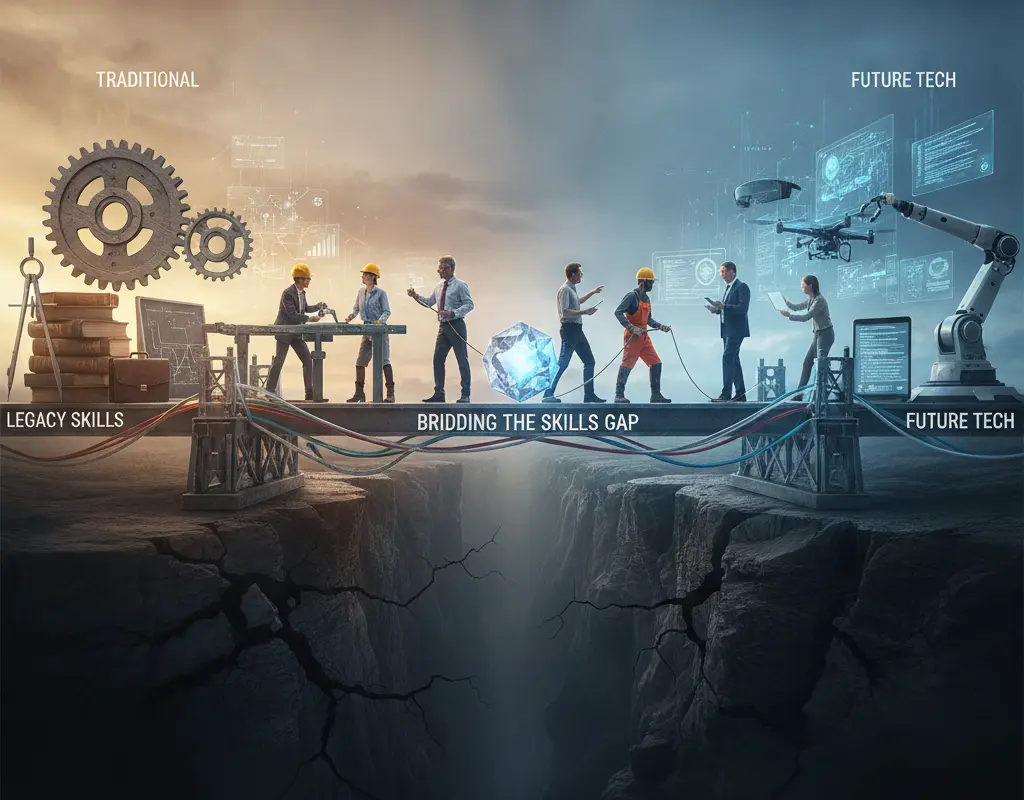
You’ve reached a point in your career where you’ve built a solid foundation. You’re experienced, you’re good at what you do, and you understand your industry. Yet, many mid-career professionals find themselves grappling with a subtle, often unrecognized challenge: the hidden mid-career skills gap. This isn’t about being bad at your job; it’s about the rapid evolution of the professional landscape, which can leave even seasoned experts feeling slightly out of sync.
This gap isn’t always obvious. It doesn’t typically manifest as a sudden inability to perform. Instead, it’s a creeping sense of obsolescence, a feeling that the ground beneath your feet is shifting faster than you can adapt. Ignoring this phenomenon means risking stagnation, missed opportunities, and a gradual erosion of your professional relevance. Let’s unmask this hidden challenge and equip you with the strategies to not just survive, but thrive.

The Shifting Sands of the Modern Workforce
The world of work is in constant flux. Technological advancements, global economic shifts, and changing consumer behaviors are reshaping industries at an unprecedented pace. What was once a cutting-edge skill can become foundational, or even obsolete, in a matter of years. This rapid evolution creates a dynamic environment where continuous learning isn’t just a buzzword; it’s a non-negotiable requirement for sustained career vitality.
For mid-career professionals, this acceleration presents a unique challenge. You’ve invested years, sometimes decades, honing specific expertise. However, the very nature of that expertise is being redefined. Automation and artificial intelligence are taking over routine tasks, demanding that human workers elevate their game by focusing on uniquely human capabilities and higher-order thinking. This isn’t a threat to your experience; it’s a call to evolve it.
Why Mid-Career Professionals Are Uniquely Vulnerable
Entry-level professionals often enter the workforce with the latest tools and methodologies fresh in their minds. Senior leaders, on the other hand, are typically focused on strategic direction, delegating operational specifics. Mid-career professionals often find themselves in the middle, expected to both execute and innovate. They must maintain proficiency in their established domains while simultaneously acquiring new skills to stay relevant and lead future initiatives.
This isn’t about blaming you for not keeping up. It’s about recognizing systemic pressures. Many companies prioritize upskilling new hires or investing in leadership development, sometimes overlooking the critical needs of their experienced, mid-level talent. Consequently, many mid-career individuals are left to navigate this skills landscape largely on their own, often without clear guidance or dedicated resources.
Recognizing the gap is the first step toward bridging it. This isn’t always straightforward because the signs can be subtle. They often manifest as frustrations, inefficiencies, or a vague sense of being left behind. You might notice these indicators in your day-to-day work or during career planning discussions.
Warning Signs: Are You Experiencing the Gap?
- Stalled Progression: You’re consistently passed over for promotions or key projects, despite your experience and loyalty. Your career trajectory feels flat.
- Feeling Overwhelmed by New Tech: Colleagues seem to pick up new software, platforms, or methodologies with ease, while you struggle or avoid them, feeling like you’re constantly playing catch-up.
- Lack of Project Ownership: You find yourself relegated to maintaining existing systems rather than leading innovative new initiatives or shaping strategic direction.
- Difficulty Articulating Value: You struggle to explain how your current skills contribute to the company’s future goals, or how they align with emerging industry trends.
- Disconnection from Younger Colleagues: You notice a growing disconnect in communication styles, preferred tools, or approaches to problem-solving with newer generations in the workforce.
These aren’t just minor inconveniences; they are signals that a deeper, systemic shift is occurring within your professional environment. Pay attention to these cues, as they offer valuable insights into areas where your skill set might need an upgrade or realignment.
Beyond Technical Skills: The Evolving Demand for Leadership and Strategic Thinking
While technical proficiency remains crucial, the most significant shifts for mid-career professionals often lie in the realm of soft skills, which are increasingly becoming ‘power skills.’ Companies aren’t just looking for people who can do the work; they need individuals who can think critically, adapt quickly, and lead effectively. The World Economic Forum’s Future of Jobs Report consistently highlights skills like critical thinking, analysis, problem-solving, and self-management as top priorities for employers globally. This means that if you’re looking to move into a leadership role, or even just to maintain your influence, developing these capabilities is paramount. Learn more about the expectations by considering 5 Signs You’re Ready to Move Into a Leadership Role.
Moreover, the ability to translate complex information into actionable insights, to foster collaboration across diverse teams, and to drive change are now essential. These aren’t skills you learn once; they require continuous refinement and application in varied contexts. Ignoring these evolving demands for leadership and strategic thinking is a significant aspect of the hidden mid-career skills gap.
The Silent Erosion of Relevance
Let’s dive deeper into specific areas where skills can silently erode, diminishing your relevance if left unaddressed.
- Digital Fluency & Data Literacy: It’s no longer enough to be proficient in Microsoft Office. Modern workplaces demand comfort with cloud-based tools, data analytics platforms, collaboration software, and even a basic understanding of AI’s capabilities and limitations. You don’t need to be a programmer, but you must be able to interact intelligently with these technologies and interpret the data they generate.
- Adaptability & Resilience: The pace of change will only accelerate. The ability to pivot, learn new systems, embrace ambiguity, and recover quickly from setbacks is a meta-skill that underpins all others. This isn’t just about coping; it’s about actively thriving in uncertainty.
- Strategic Communication & Influence: As you advance, your role shifts from doing to guiding. This requires superior communication skills – the ability to articulate complex ideas clearly, persuade stakeholders, negotiate effectively, and build strong professional relationships. This is crucial for anyone aiming to make a significant impact. Developing these skills also contributes to your personal brand, which matters even more as you progress. Consider how Why Your Personal Brand Matters More After 35 can impact your career trajectory.
- Cross-Functional Collaboration: Silos are breaking down. Projects increasingly require input from multiple departments. Your ability to work effectively across different teams, understand diverse perspectives, and facilitate interdisciplinary efforts is a huge asset.
Bridging The Gap: Your Actionable Playbook
Now that we’ve identified the problem, let’s focus on solutions. Bridging the hidden mid-career skills gap requires a proactive, strategic approach. It’s not about learning everything; it’s about learning the *right* things that align with your career goals and future industry needs.
Step 1: Self-Assessment & Future-Proofing Your Skill Set
Start with an honest evaluation of where you stand and where you want to go. This isn’t a one-time exercise but an ongoing process of reflection and adjustment.
- Analyze Aspirations: Look at job descriptions for roles you aspire to – not just within your current company, but also roles at other leading organizations. What skills, tools, and experiences are consistently listed? Highlight the gaps between your current profile and these requirements.
- Consult Your Network: Talk to mentors, senior leaders, and even recruiters in your field. Ask them: “What skills do you see becoming critical in the next 3-5 years?” or “What do you wish mid-career professionals understood better about future demands?” Their insights are invaluable.
- Identify Core Transferable Skills: What are your foundational strengths? How can you reframe or apply them to new contexts? For example, if you’re a strong project manager, how can you apply that to managing AI implementation projects? This exercise helps you see how existing abilities can form a springboard for new learning.
Step 2: Targeted Learning & Application
Once you’ve identified your target skills, develop a focused learning plan. Remember, quality over quantity.
- Micro-credentialing and Online Courses: Platforms like Coursera, edX, LinkedIn Learning, and specific industry associations offer certifications and courses that can quickly equip you with in-demand skills. Focus on practical, project-based learning.
- Side Projects and Volunteer Work: The best way to learn is by doing. Take on a side project at work, volunteer for a committee, or even start a personal project that allows you to apply new skills in a low-stakes environment. For instance, if you want to improve data visualization, offer to create a new dashboard for a non-profit.
- Mentorship and Reverse Mentorship: Seek out mentors who excel in the areas you want to develop. Also, consider reverse mentorship – where a younger colleague teaches you about new technologies or trends. This reciprocal learning can be incredibly powerful. Thinking about your career path, you might find value in exploring Should You Take the Management Track or Stay an Individual Contributor? A Decision Framework to guide your learning choices.
- Active Participation in Industry Forums: Engage with professional communities, attend webinars, and read industry reports. Staying current with trends and discussions helps you anticipate future skill needs.
Step 3: Strategic Networking & Visibility
Learning new skills is only half the battle; the other half is making sure your new capabilities are recognized and valued. This is where strategic networking and personal branding come into play. It’s about demonstrating your growth and showcasing your evolving expertise.
- Update Your Professional Brand: Ensure your LinkedIn profile, resume, and professional bios reflect your newly acquired skills and your proactive approach to career development. Highlight projects where you applied new knowledge. For a comprehensive guide, refer to Personal Branding for Mid-Career: Your Strategic Starting Point.
- Communicate Your Growth: Don’t assume your boss or colleagues notice your efforts. Proactively share what you’re learning, how you’re applying it, and the positive impact it’s having. This can be in one-on-one meetings, team updates, or internal presentations.
- Seek Out Opportunities: Once you’ve developed new skills, actively look for projects or initiatives where you can apply them. Raise your hand for challenging assignments, even if they’re outside your comfort zone. This demonstrates initiative and solidifies your new capabilities.
Conclusion
The hidden mid-career skills gap is a reality, but it’s not a sentence to professional obsolescence. Instead, it’s an invitation to engage in continuous growth and strategic evolution. By understanding the forces at play, honestly assessing your current standing, and proactively investing in targeted learning, you can transform this challenge into a powerful catalyst for career advancement.
Remember, your experience is invaluable. When combined with a forward-looking mindset and a commitment to acquiring new, relevant skills, you position yourself not just to adapt to the future of work, but to actively shape it. Embrace this journey of lifelong learning, and you will ensure your professional relevance and impact for years to come.