
Ever feel like your professional identity is stuck in a time warp? You’ve grown, learned, and evolved, but your personal brand still echoes a past version of yourself. This is a common mid-career challenge, and it’s precisely why it’s crucial to know how to effectively audit your personal brand. It’s not just about updating a LinkedIn profile; it’s about a deep dive into who you are now, who you want to be, and how you’re perceived.
Many professionals mistakenly believe their brand is fixed once established. In reality, a personal brand is a living, breathing entity that needs regular check-ups, especially as you navigate the complexities of mid-career. You might be aiming for a leadership role, pivoting to a new industry, or simply wanting your reputation to accurately reflect your current expertise and aspirations. Ignoring this audit can leave you feeling misaligned, undervalued, and overlooked for opportunities that truly excite you.

Why Your Personal Brand Needs a Mid-Career Check-Up
Think about it: your career goals shift, your skills expand, and the industry itself morphs at an incredible pace. What was relevant five or ten years ago might not be your core strength or passion today. Yet, many professionals continue to project an outdated image, often without even realizing it. This isn’t just a missed opportunity; it can actively hinder your progress.
A well-maintained personal brand acts as your professional compass, guiding perceptions and opening doors. At mid-career, you’ve accumulated significant experience, but if that experience isn’t clearly articulated and consistently presented, its impact is diluted. This is where a strategic audit comes in, allowing you to identify misalignments and intentionally sculpt the narrative that serves your future ambitions.
The 5-Step Process to Audit Your Personal Brand
Step 1: Define Your Desired Future Self & Brand
Before you can audit, you need a benchmark. What is the ideal professional identity you want to embody? What kind of impact do you aspire to make? This isn’t about wishful thinking; it’s about clarity. Take time to articulate your core values, your unique strengths, and the specific problems you want to solve. Consider the roles you envision yourself in, the industries you want to influence, and the legacy you hope to build.
For example, you might currently be known as an excellent “project manager.” However, your desired future self might be an “innovation leader” who drives strategic change across departments. The language, skills, and network associated with these two identities are vastly different. Clearly defining this future self provides the crucial “north star” for your entire brand reset.
Step 2: Conduct a 360-Degree Brand Inventory
Now, it’s time to gather data on your current brand perception. This step requires brutal honesty and a willingness to see yourself through others’ eyes. Start by examining your digital footprint. What do your LinkedIn profile, personal website, Twitter feed, or any other professional platforms communicate? Is it consistent? Is it up-to-date? Look at the language, the endorsements, the content you share, and even your profile picture.
Beyond the digital, consider your offline presence. How do you introduce yourself at networking events? What’s your reputation among colleagues and former bosses? For a truly comprehensive view, consider asking trusted mentors, peers, or even former colleagues for candid feedback. Questions like “What do you think I’m best known for?” or “What’s one thing you think I should improve in how I present myself?” can yield invaluable insights. Research from LinkedIn Business often highlights the importance of a consistent and authentic online presence for career growth, underscoring the necessity of this inventory phase.
Step 3: Identify Gaps and Inconsistencies
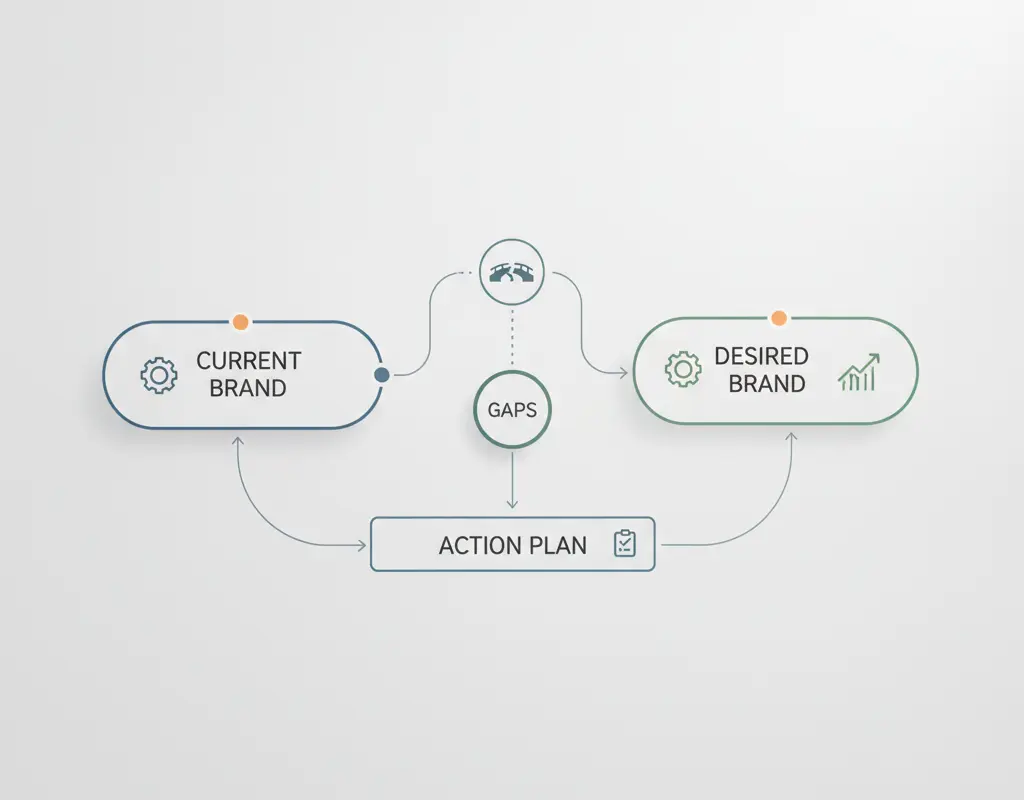
With your desired future brand defined and your current brand inventory complete, the next step is to highlight the discrepancies. Where does your current brand narrative fall short of your aspirations? Are there skills you’ve developed that aren’t visible? Is your LinkedIn profile still emphasizing achievements from a decade ago, rather than your most recent, impactful contributions?
Perhaps your online presence suggests you’re a meticulous detail-oriented specialist, but you now aspire to be seen as a strategic visionary. Or maybe your network still consists predominantly of contacts from an old industry, even though you’re actively trying to pivot. These gaps aren’t failures; they are clear indicators of where your brand needs work. The Edelman Trust Barometer consistently shows that authenticity and transparency are key drivers of trust; inconsistencies in your brand can inadvertently erode that trust, both internally and externally.
Step 4: Craft Your Refined Brand Narrative
Once you understand the gaps, it’s time to build the bridge. Your refined brand narrative is your updated story – a clear, compelling, and concise articulation of who you are, what value you bring, and where you’re headed. This isn’t just about listing job titles; it’s about weaving a story that connects your past experiences to your future ambitions.
Develop a powerful elevator pitch that succinctly captures your essence. What are your three core messages? What unique value proposition do you offer? Practice articulating this narrative until it feels natural and authentic. A compelling narrative helps others understand your unique contribution and why you’re the right person for your desired opportunities. As highlighted in the Harvard Business Review, a strong personal narrative is crucial for standing out in a crowded professional landscape, enabling you to control how others perceive your value.
Step 5: Develop an Action Plan for Resetting
A brand audit is meaningless without action. This step is all about the tactical implementation of your refined narrative. Break down your brand reset into manageable, actionable tasks. This might include:
- **Updating Your Digital Presence:** Revamp your LinkedIn profile, personal website, and other professional social media. Ensure your new narrative, skills, and aspirations are front and center.
- **Content Creation:** Start sharing insights, articles, or comments that align with your desired brand. This demonstrates your expertise and thought leadership.
- **Networking Strategy:** Intentionally connect with individuals in your target industries or roles. Engage in conversations that allow you to articulate your refined brand.
- **Skill Development:** If your desired brand requires new skills, commit to learning and showcasing them.
- **Internal Alignment:** Ensure your brand reset is reflected in your internal communications, project contributions, and leadership style within your current role.
Consistency is the bedrock of a successful brand reset. It’s not a one-time fix but an ongoing commitment to living and communicating your authentic, updated professional self. Forbes Careers often emphasizes the importance of a proactive and consistent approach to career management, which includes continuous personal brand development.
Common Pitfall: The “Set It and Forget It” Trap
One of the most common mistakes professionals make after a brand audit and reset is assuming the work is done. Your personal brand isn’t a static monument; it’s a dynamic, evolving entity. The “set it and forget it” mentality is dangerous because the professional landscape, your skills, and your aspirations will continue to change. If you don’t continually monitor and adapt your brand, you’ll find yourself back in the same misaligned position a few years down the line.
Imagine Sarah, who diligently audited and updated her brand six months ago, landing a great new role. She then stopped engaging online, stopped seeking feedback, and let her profile become stagnant. While she achieved her immediate goal, she missed opportunities to solidify her new brand, build new connections, and proactively position herself for the *next* career step. Continuous engagement, learning, and slight adjustments keep your brand relevant and vibrant.
Real-World Example: Mark’s Brand Transformation
Mark, a seasoned marketing professional in his late 40s, felt increasingly pigeonholed in traditional advertising roles. He had a strong track record, but his online presence and networking focused heavily on print and broadcast media, even though he had been leading successful digital transformation projects for years. He felt undervalued and overlooked for senior leadership roles in digital-first companies.
He decided to audit his personal brand. First, he clearly defined his desired future self: a “Digital Strategy Visionary” who bridges traditional marketing wisdom with cutting-edge digital innovation. Next, his brand inventory revealed a stark contrast: his LinkedIn still highlighted old campaign awards, and his network was largely from his traditional past. He identified the gap: a disconnect between his actual, current expertise in digital strategy and his public-facing brand.
Mark then crafted a new narrative, emphasizing his leadership in digital transformation, his ability to scale online campaigns, and his passion for emerging tech. His action plan was comprehensive: he completely revamped his LinkedIn, started publishing articles on digital marketing trends, actively sought out speaking engagements on digital strategy, and strategically networked with leaders in tech and e-commerce. Within a year, Mark successfully transitioned into a Chief Digital Officer role at a rapidly growing e-commerce firm, a move he attributes directly to his deliberate brand audit and reset.
Conclusion
Your personal brand is one of your most valuable professional assets, and like any asset, it requires regular maintenance and strategic realignment. Taking the time to audit your personal brand mid-career isn’t a luxury; it’s a necessity for sustained growth, relevance, and satisfaction. It’s about empowering yourself to shape your narrative, rather than letting circumstance define it.
By following these steps – defining your future self, conducting a thorough inventory, identifying gaps, crafting a new narrative, and executing an action plan – you’re not just updating a profile; you’re intentionally carving out your future. Embrace this process as an exciting opportunity to showcase the full breadth of your experience and potential, ensuring your professional identity truly reflects the impactful leader you are becoming.