
Presenting to senior leadership is more than just sharing information; it’s an opportunity to influence decisions, showcase your strategic thinking, and build your professional reputation. The key to unlocking this potential lies in mastering the right executive presentation structure. Without a clear, compelling framework, even the most brilliant ideas can fall flat. You need a structure that respects executive time, cuts through noise, and drives action.
Many professionals mistakenly believe that great content alone is enough. However, the true impact comes from how you package and deliver that content. Senior leaders operate at a high level, constantly synthesizing complex information. Your job is to make their job easier by providing a logical, concise narrative that leads them directly to your recommendation and the desired outcome.

Why Structure is Your Secret Weapon in Executive Presentations
When you step into a room with senior executives, you’re not just presenting data; you’re vying for their most precious commodity: their time and attention. A robust executive presentation structure isn’t merely a format; it’s a strategic tool. It allows you to articulate complex ideas with precision, maintain engagement, and steer the conversation towards a productive conclusion. This structured approach helps prevent tangents, ensures all critical points are covered efficiently, and ultimately enhances your credibility.
Think of it as building a bridge: each section supports the next, guiding your audience smoothly from context to conclusion. This clarity is paramount for executives who need to grasp the essential message quickly and make informed decisions. Furthermore, developing strong presentation skills contributes significantly to your overall personal brand, positioning you as a capable and strategic thinker.
The Foundational Elements of a Winning Executive Presentation Structure
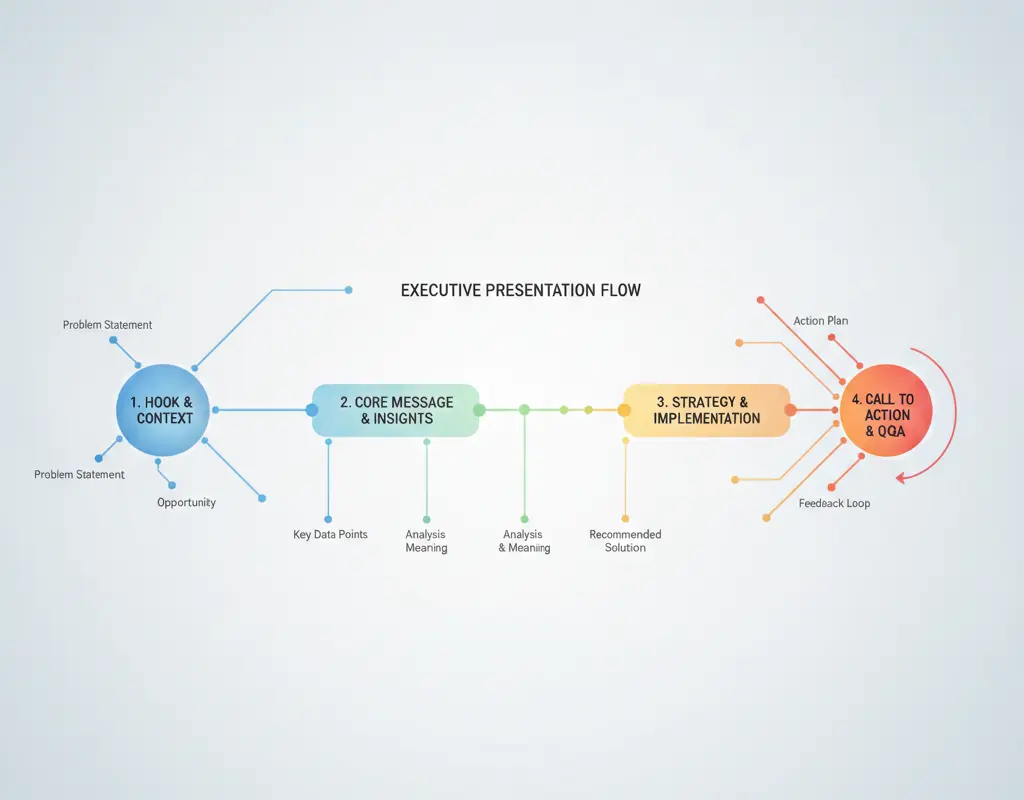
Every great executive presentation, regardless of its specific content, follows a predictable and effective structural arc. This isn’t about rigid templates, but about understanding the core components that resonate with busy leaders. Here’s the breakdown:
- The Executive Summary: The ‘Why’ and ‘What’ Upfront
Start with your conclusion. Seriously. Executives want to know the bottom line immediately. Begin by stating your recommendation or key message, followed by the most critical supporting insights, and finally, your specific ask. This upfront clarity respects their time and sets the stage for the details to follow. It’s a micro-story that encapsulates your entire presentation. - The Problem/Opportunity: Contextualize the Challenge
Once you’ve delivered the executive summary, you can delve into the ‘why’. Clearly define the problem you’re addressing or the opportunity you’re seizing. Use data and relevant context to illustrate the scope and impact. Frame it in terms that resonate with the executive’s strategic priorities, demonstrating that you understand the broader business landscape. - Your Solution/Recommendation: The Path Forward
This is where you present your proposed solution or recommendation. Be specific, actionable, and concise. Explain what needs to be done, who will do it, and what the anticipated timeline is. Avoid jargon and focus on clarity. If there are alternatives, briefly acknowledge why your chosen path is superior. - The Rationale/Support: Evidence-Based Confidence
Now, provide the evidence that supports your solution. This includes data, analysis, market trends, financial projections, and any other relevant insights. This section isn’t about overwhelming them with information, but about providing sufficient proof points to validate your recommendation. Remember, executives value data-driven insights. As Harvard Business Review often emphasizes, compelling narratives are built on solid evidence. - The Call to Action: What You Need From Them
End with a clear, specific call to action. What decision do you need them to make? What resources do you require? What are the next steps? Be explicit. Remove any ambiguity about what you expect from the leadership team. This ensures that the meeting concludes with a clear understanding of responsibilities and forward momentum.
Practical Application: Crafting Your Narrative Flow
Let’s consider a mini-scenario: You need approval for a new marketing campaign. Instead of diving into creative concepts, your structured approach would look like this:
“Good morning, team. We recommend launching the ‘Innovate & Grow’ digital campaign to capture an additional 15% market share in Q3, requiring a $200,000 budget approval. This campaign directly addresses our declining engagement rates among a key demographic, a challenge that has seen our competitor gain traction. Our proposed strategy leverages AI-driven personalization and a multi-channel approach, projected to yield a 3x ROI within six months. We need your approval today to greenlight the budget and initiate immediate implementation.”
This script immediately provides the executive summary, problem, solution, rationale, and call to action. The rest of your presentation then unpacks each of these points with supporting details. This structured approach not only makes your argument more persuasive but also demonstrates your strategic thinking and readiness for leadership roles. It’s an effective way to articulate your vision and secure buy-in, which is a critical aspect of personal branding for mid-career professionals.
Conclusion: Command Attention, Drive Decisions
Mastering the executive presentation structure is not just about delivering information; it’s about crafting a narrative that respects executive time, demonstrates strategic thinking, and drives decisive action. By leading with the conclusion, framing the problem clearly, presenting a well-supported solution, and ending with a precise call to action, you transform your presentations from mere updates into powerful tools for influence.
Embrace this structured approach in your next executive meeting. You’ll find that your message resonates more deeply, your recommendations gain quicker traction, and your ability to lead and inspire becomes undeniable. Invest in understanding and applying this framework, and you’ll consistently elevate your impact within any organization.